
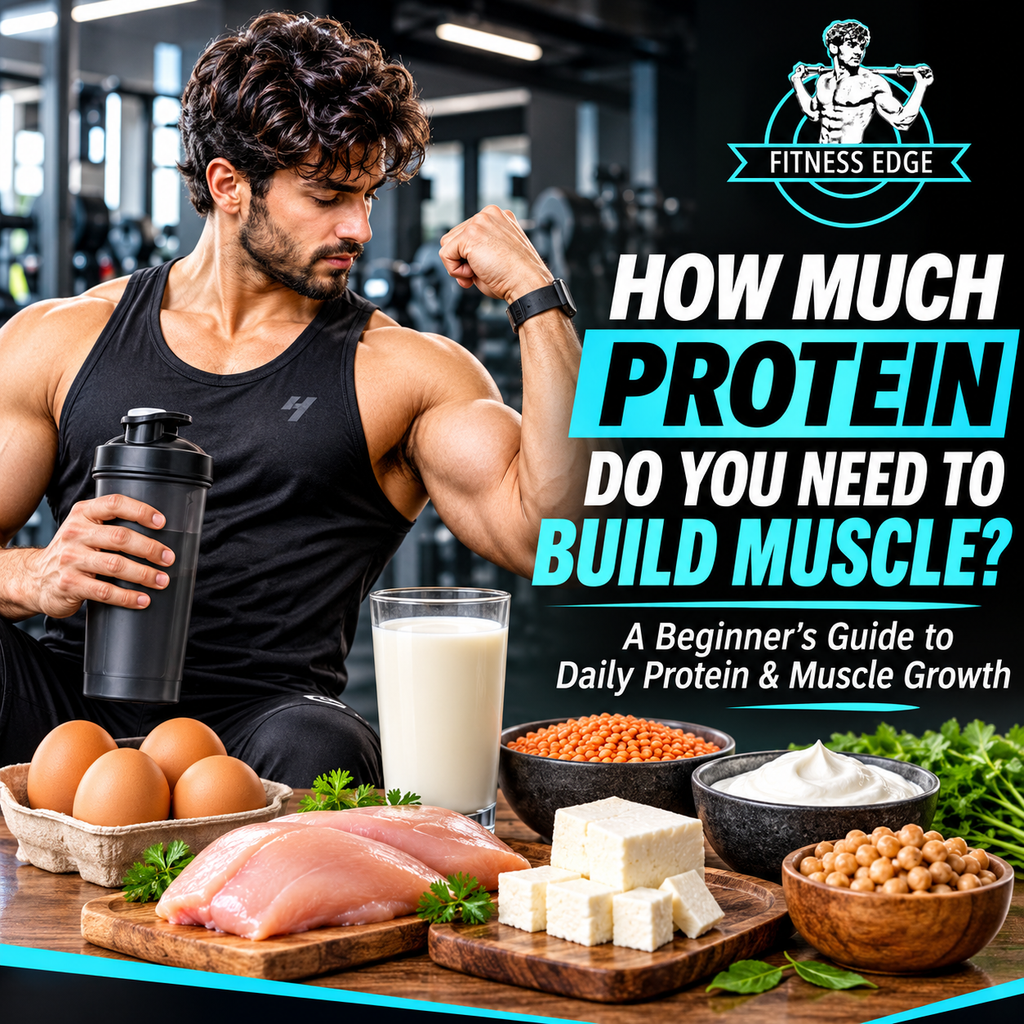
Building muscle is not just about lifting weights at the gym. Your nutrition plays an equally important role, especially when it comes to protein. Whether you are a beginner or an experienced gym member, eating enough protein helps your body repair muscle tissue, recover after workouts, and support muscle growth.
But how much protein do you actually need every day? Should you eat eggs, chicken, paneer, or take protein supplements?
In this guide, we explain how much protein you need to build muscle, the best protein-rich foods, and how to include protein in your daily diet.
1. Why Is Protein Important for Muscle Growth?
Protein is made up of amino acids, which are essential for repairing and maintaining body tissues, including muscles.
When you perform strength-training exercises such as squats, bench presses, push-ups, and dumbbell workouts, your muscles experience stress. Your body uses dietary protein to support muscle repair and adaptation.
The main benefits of protein include:
- Supports muscle repair and growth.
- Helps maintain muscle mass.
- Supports recovery after strength training.
- Helps you feel fuller for longer.
- Contributes to several important body functions.
Remember, protein alone does not build muscle. You also need consistent strength training, sufficient energy, and proper recovery.
2. How Much Protein Do You Need Every Day?
Your daily protein requirement depends on your body weight, activity level, fitness goals, and overall health.
For healthy adults who regularly perform strength training, approximately 1.4–2.0 grams of protein per kilogram of body weight per day is a commonly used range.
Daily protein requirement by body weight
| Body Weight | Daily Protein Range |
| 50 kg | 70–100 g |
| 55 kg | 77–110 g |
| 60 kg | 84–120 g |
| 65 kg | 91–130 g |
| 70 kg | 98–140 g |
| 75 kg | 105–150 g |
| 80 kg | 112–160 g |
| 85 kg | 119–170 g |
| 90 kg | 126–180 g |
| 100 kg | 140–200 g |
These are general estimates, not strict targets. If you have a higher body-fat percentage or are following a weight-loss programme, calculating protein from goal or adjusted body weight may be more appropriate than using your entire current body weight. A registered dietitian can help determine your individual target.
3. Best Protein-Rich Foods for Muscle Building
You do not need expensive supplements to get enough protein. Many everyday Indian foods provide good amounts of protein.
Non-vegetarian protein sources
| Food | Approximate Protein |
| 100 g cooked chicken breast | 30–31 g |
| 100 g cooked fish | 20–25 g |
| 2 large eggs | 12–13 g |
| 100 g cooked prawns | 20–24 g |
| 250 ml milk | 8 g |
Vegetarian protein sources
| Food | Approximate Protein |
| 100 g paneer | 18–20 g |
| 100 g tofu | 10–15 g |
| 100 g cooked chickpeas | 8–9 g |
| 100 g cooked dal | 6–9 g |
| 100 g cooked rajma | 8–9 g |
| 200 g curd | 7–10 g |
Values vary by food variety, brand, preparation, and serving size. Check product labels for packaged foods.
4. How to Distribute Protein Throughout the Day
Instead of consuming most of your protein in one meal, try to spread it across your daily meals.
For example, someone targeting approximately 120 g of protein could distribute it like this:
| Meal | Example Foods | Protein Target |
| Breakfast | Eggs, milk, or paneer | 25 g |
| Mid-morning | Curd or Greek yogurt | 15 g |
| Lunch | Chicken, fish, or dal with curd | 30 g |
| Evening snack | Milk or roasted chana | 15 g |
| Dinner | Chicken, paneer, tofu, or legumes | 30 g |
| Before bed | Milk or curd, if needed | 5 g |
| Total | 120 g |
This is an example distribution, not a mandatory meal plan. Adjust portions and food choices to your actual nutritional needs.
5. Should You Take Protein Powder to Build Muscle?
Protein powder is not compulsory for muscle growth. It is simply a convenient way to increase your daily protein intake when regular meals are not enough.
Common options include:
- Whey protein: A milk-based protein supplement.
- Whey isolate: A more filtered whey option, often with less lactose.
- Plant protein: Options made from sources such as soy, peas, or rice.
Before buying a supplement, check its ingredients, protein content, quality testing, and suitability for your dietary needs. Choose products from reputable manufacturers.
If you can meet your protein requirements through everyday foods, you may not need protein powder at all.
6. Common Protein Mistakes to Avoid
Many gym beginners misunderstand protein requirements. Avoid these common mistakes:
- Eating too little protein: Consistently falling short may make it harder to support muscle development.
- Depending only on supplements: Whole foods provide additional nutrients that protein powders may not.
- Ignoring total calories: Your overall energy intake also affects muscle growth and recovery.
- Eating all your protein in one meal: Distributing protein across meals can be a practical approach.
- Skipping strength training: Protein intake without resistance exercise is not enough to maximise muscle growth.
- Expecting instant results: Building muscle takes consistent training, nutrition, and recovery.
7. Protein and Muscle Building: What About Weight Loss?
You can work towards losing body fat while maintaining or building muscle, particularly if you are new to strength training.
Protein can help support muscle maintenance during weight loss and may improve fullness after meals.
For better results:
- Include protein in your main meals.
- Follow a suitable strength-training programme.
- Maintain a sensible calorie deficit if fat loss is your goal.
- Include vegetables, fruits, and fibre-rich foods.
- Get sufficient sleep and recovery.
Avoid extreme calorie restriction because it can negatively affect training performance and muscle retention.
Frequently Asked Questions
How much protein should I eat to build muscle?
For many healthy adults who strength train, approximately 1.4–2.0 grams per kilogram of body weight per day is a useful general range. Your individual target may differ.
Can I build muscle without protein powder?
Yes. Foods such as eggs, chicken, fish, milk, paneer, tofu, lentils, and chickpeas can provide the protein needed to support muscle growth.
Is eating eggs every day good for muscle building?
Eggs are a convenient source of high-quality protein. Whether they fit your daily diet depends on your overall nutrition, health, and dietary preferences.
Should I eat protein before or after a workout?
Both pre-workout and post-workout meals can contribute to your daily protein intake. Focus on getting enough protein throughout the day rather than worrying about a narrow post-workout window.
Can too much protein be harmful?
More protein is not automatically better. Very high intakes may be unnecessary, and people with kidney disease or certain medical conditions may need individual dietary guidance.
Build Muscle with the Right Training and Nutrition at The Fitness Edge
Building muscle requires more than lifting heavier weights. A balanced approach that combines strength training, sufficient protein, good nutrition, and recovery can help you make steady progress.
At The Fitness Edge, focus on developing a structured workout routine and healthy habits that support your fitness goals.
Start with the right plan, stay consistent, and make every workout count.
Ready to improve your fitness? Contact The Fitness Edge and take the next step towards a stronger, healthier body.