
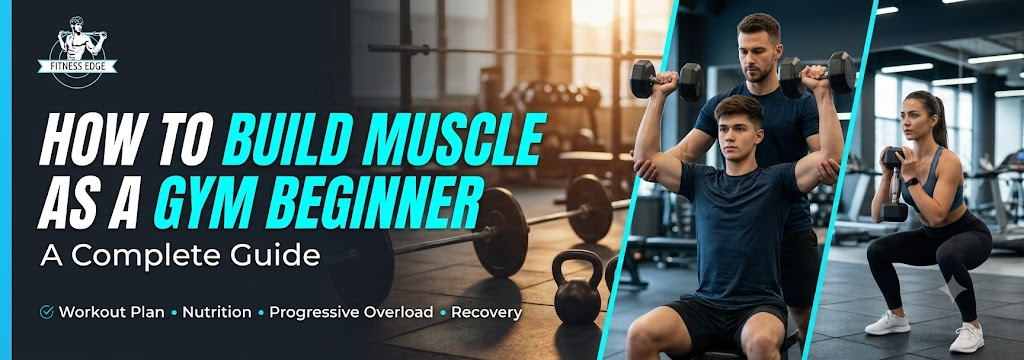
Building muscle as a gym beginner can feel confusing. You may wonder which exercises to perform, how much weight to lift, what foods to eat, and how long it takes to see results. The good news is that you do not need complicated workouts or expensive supplements to get started.
With consistent strength training, balanced nutrition, proper recovery, and guidance from experienced trainers, beginners can gradually build muscle and improve overall fitness.
At The Fitness Edge, beginners can focus on learning the correct exercise techniques, developing strength, and building a sustainable gym routine.
1. Start with a Beginner-Friendly Workout Plan
If you are new to the gym, begin with a manageable routine rather than training every day. Full-body strength workouts are a practical option because they allow you to train major muscle groups while leaving time for recovery.
Aim for two to three strength-training sessions per week initially, adjusting according to your fitness level and recovery.
Beginner workout schedule
| Day | Workout |
| Monday | Full-body strength training |
| Tuesday | Walking or light cardio |
| Wednesday | Full-body strength training |
| Thursday | Rest or light activity |
| Friday | Full-body strength training, if recovered |
| Saturday | Walking, mobility, or recreational activity |
| Sunday | Rest and recovery |
Start with two sessions if needed. Increase training gradually as your technique and fitness improve.
2. Focus on the Right Muscle-Building Exercises
Beginners should learn fundamental movement patterns before attempting advanced exercises. Choose weights that allow you to maintain proper form throughout each set.
Useful beginner exercises include:
- Chest: Chest press or incline push-ups
- Back: Lat pulldown or seated cable row
- Shoulders: Seated dumbbell shoulder press
- Legs: Bodyweight squats, leg press, or goblet squats
- Arms: Dumbbell biceps curls and cable triceps pushdowns
- Core: Planks and dead bugs
Start with one to three sets per exercise, generally performing 8–12 controlled repetitions where appropriate. Some exercises, especially core movements, may use different repetition or time targets.
Ask a qualified trainer to demonstrate unfamiliar movements and help you select suitable weights.
3. Use Progressive Overload to Build Muscle
Progressive overload means gradually increasing the challenge placed on your muscles as you become stronger. It is an important part of muscle development.
You can progress by:
- Increasing the weight slightly when your current weight feels manageable.
- Performing additional repetitions while maintaining good technique.
- Improving your control and range of motion.
- Completing your workout with more consistent form.
For example, if you can comfortably perform 10 repetitions with a particular weight, work toward 12 controlled repetitions before considering a small weight increase.
Do not increase weights at the expense of technique. Consistent, controlled progress is more useful than lifting as heavy as possible.
4. Eat Enough Protein and Balanced Meals
Exercise stimulates muscle adaptation, while adequate nutrition provides the energy and building blocks your body needs to recover.
Include protein-rich foods throughout the day, such as:
- Eggs
- Chicken and fish
- Milk, curd, and paneer
- Dal, chickpeas, and rajma
- Soybeans, tofu, and other soy foods
For many healthy adults who strength train, approximately 1.4–2.0 grams of protein per kilogram of body weight per day can be a useful general range. Your individual needs depend on your health, body composition, goals, and total calorie intake. If you have kidney disease or another condition requiring dietary restrictions, consult a healthcare professional before increasing protein.
Also include carbohydrates for workout energy, healthy fats, vegetables, fruit, and sufficient overall food intake. Supplements are not essential for beginners.
5. Get Enough Sleep and Recovery
Muscles need time to recover between challenging workouts. Training the same muscles intensely every day can make it harder to recover and maintain good performance.
To support recovery:
- Aim for 7–9 hours of sleep each night as an adult.
- Allow recovery time between hard sessions targeting the same muscle groups.
- Drink water regularly throughout the day.
- Eat balanced meals after training.
- Reduce workout intensity when you feel unusually fatigued.
Mild muscle soreness can occur when starting a new routine. Sharp pain, significant swelling, or persistent pain is not something to push through; stop the aggravating exercise and seek appropriate medical advice.
6. Avoid Common Muscle-Building Mistakes
Beginners sometimes slow their progress by doing too much too soon or changing routines constantly.
Avoid these common mistakes:
- Lifting weights that are too heavy: Learn correct technique first.
- Skipping warm-ups: Prepare with a few minutes of light activity and movement-specific warm-up sets.
- Ignoring nutrition: Eat enough balanced food to support training and recovery.
- Training without a plan: Follow a consistent routine and record your progress.
- Expecting overnight results: Muscle growth takes time and consistency.
- Neglecting sleep: Recovery is part of an effective training programme.
- Comparing yourself with others: Progress varies from person to person.
7. How Long Does It Take to Build Muscle?
Muscle growth depends on training experience, genetics, nutrition, sleep, consistency, and the quality of your workout programme.
During the first few weeks, you may notice improvements in exercise technique, coordination, and strength. Visible muscle changes often take several weeks to months and vary considerably between individuals.
Track your progress using workout records, improvements in repetitions and weights, and occasional measurements. Do not rely on daily scale changes alone to judge muscle growth.
Frequently Asked Questions
Can beginners build muscle in three months?
Yes. Many beginners can make noticeable strength improvements over three months with consistent training, balanced nutrition, and recovery. The amount of visible muscle growth varies.
How many days should a beginner go to the gym?
Two to three strength-training sessions per week is a reasonable starting point for many beginners. The right frequency depends on your schedule, fitness level, and recovery.
Should beginners lift heavy weights to build muscle?
No. Start with a manageable weight that allows controlled repetitions and good technique. Increase the challenge gradually as you become stronger.
Is protein powder necessary for muscle growth?
No. You can meet your protein needs through foods such as eggs, dairy, chicken, fish, lentils, and soy. Protein powder is a convenience, not a requirement.
Can I build muscle and lose fat at the same time?
It may be possible, particularly for beginners and people returning to training. Results depend on your starting body composition, nutrition, workout routine, and recovery.
Start Your Muscle-Building Journey at The Fitness Edge
Building muscle does not require a perfect start. It requires a realistic plan, proper technique, balanced nutrition, and consistency.
At The Fitness Edge, focus on building a strong foundation with structured workouts and guidance suited to your fitness level. Start today, track your progress, and improve one workout at a time.
Ready to begin? Visit The Fitness Edge website or contact the gym to learn about beginner-friendly training options.