
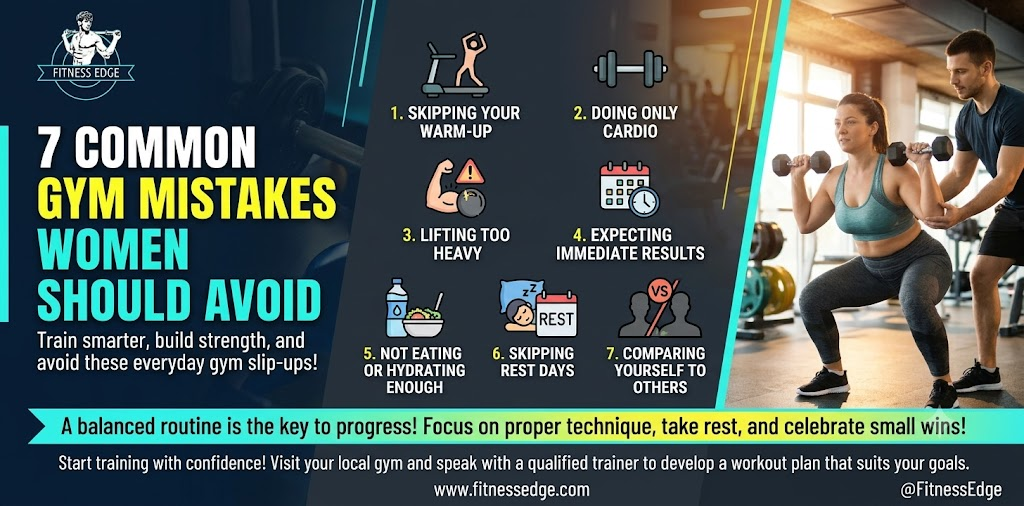
Starting a gym routine is an excellent step toward improving your health, strength, and confidence. However, many women make simple workout mistakes that can slow their progress, affect recovery, or make exercising more challenging than necessary.
Whether you are a beginner or already working out regularly, understanding these mistakes can help you train smarter and build a sustainable fitness routine.
In this guide, we will explore 7 common gym mistakes women should avoid and share practical tips to make your workouts safer and more effective.
1. Skipping Your Warm-Up
One of the most common gym mistakes is starting an intense workout without preparing your body. A warm-up helps gradually increase your heart rate and prepares your muscles for exercise.
How to avoid it:
- Walk on a treadmill for 5–10 minutes.
- Perform gentle dynamic movements.
- Start strength exercises with lighter weights.
- Increase your workout intensity gradually.
A proper warm-up helps you transition into your workout comfortably.
2. Doing Only Cardio and Ignoring Strength Training
Many women focus only on cardio because they believe lifting weights will make them bulky. However, strength training helps build muscle, improve strength, and support bone health.
Cardio and strength training offer different benefits, so combining them can help you develop a balanced fitness routine.
How to avoid it:
Include exercises such as squats, leg presses, chest presses, seated rows, and dumbbell exercises in your weekly routine. Start with manageable weights and focus on correct technique.
Combining resistance training with cardio and balanced nutrition can also support your weight-management goals.
3. Lifting Weights That Are Too Heavy
Lifting weights that exceed your current ability can make it difficult to maintain proper exercise technique. Using momentum or losing control of a movement may increase your risk of injury.
How to avoid it:
- Begin with a manageable weight.
- Perform each repetition with control.
- Avoid swinging your body to lift weights.
- Ask a qualified trainer to demonstrate unfamiliar exercises.
- Increase the resistance gradually as your strength improves.
Remember, proper technique matters more than lifting heavy weights.
4. Expecting Immediate Weight-Loss Results
Many women expect to see significant changes after only a few gym sessions. When results take longer than expected, they may become frustrated or stop exercising.
Weight management depends on several factors, including nutrition, physical activity, sleep, consistency, and individual differences.
How to avoid it:
- Set realistic fitness goals.
- Follow a consistent workout schedule.
- Track improvements in strength and stamina.
- Maintain balanced eating habits.
- Focus on gradual, sustainable progress.
Do not measure success only by the number on the weighing scale. Improvements in fitness, strength, and daily energy also matter.
5. Not Eating Properly or Staying Hydrated
Your body needs adequate nutrition and fluids to support exercise and recovery. Skipping meals, following extreme diets, or neglecting hydration can make workouts more difficult.
How to avoid it:
Include protein: Choose foods such as eggs, milk, curd, paneer, lentils, beans, fish, or chicken to support muscle maintenance and repair.
Eat balanced meals: Include vegetables, fruits, suitable carbohydrates, protein sources, and healthy fats.
Drink enough water: Stay hydrated throughout the day and drink during workouts as needed, particularly in hot weather.
Avoid extreme diets: Very restrictive eating can make it difficult to meet your nutritional needs and maintain your routine.
A balanced diet that matches your individual needs can help support your fitness goals.
6. Skipping Rest Days and Ignoring Recovery
Working out intensely every day does not automatically lead to faster results. Your body needs time to recover from challenging exercise.
Insufficient recovery may contribute to persistent fatigue, reduced performance, and a lack of motivation.
How to avoid it:
- Schedule rest or lighter activity when needed.
- Get approximately 7–9 hours of sleep per night as an adult, recognizing that individual needs vary.
- Avoid training the same muscles intensely on consecutive days without adequate recovery.
- Adjust your workout intensity if you feel unusually tired.
If you experience sharp pain, chest pain, dizziness, or unusual shortness of breath, stop exercising and seek appropriate medical attention.
7. Comparing Yourself With Other Women
Every woman has a different fitness level, body composition, training experience, and personal goal. Comparing your progress with someone who has been training for years can create unnecessary pressure.
Your fitness journey should focus on your own improvements rather than somebody else’s appearance.
How to avoid it:
- Set goals that are meaningful to you.
- Track your workouts and strength improvements.
- Celebrate small achievements.
- Avoid unrealistic social-media comparisons.
- Focus on consistency rather than perfection.
Building a healthy relationship with exercise can help you stay motivated and committed over the long term.
A Beginner-Friendly Weekly Gym Plan for Women
If you are new to the gym, start with a manageable routine that combines cardio and strength training.
| Day | Workout | Duration |
| Monday | Full-body strength training | 30–40 minutes |
| Tuesday | Treadmill walking or cycling | 20–30 minutes |
| Wednesday | Rest or gentle walking | 15–20 minutes |
| Thursday | Full-body strength training | 30–40 minutes |
| Friday | Cardio and mobility | 20–30 minutes |
| Saturday | Walking, swimming, or dancing | 20–40 minutes |
| Sunday | Rest and recovery | — |
Adjust this schedule according to your fitness level, goals, and recovery. Beginners can start with shorter sessions and gradually increase activity.
The World Health Organization recommends that adults aim for 150–300 minutes of moderate-intensity aerobic activity each week, along with muscle-strengthening activities on at least two days per week. These are general targets to work toward gradually, not requirements you must meet immediately.
Frequently Asked Questions
1. What are the most common gym mistakes women should avoid?
The most common mistakes include skipping warm-ups, avoiding strength training, lifting excessively heavy weights, expecting rapid weight loss, eating inadequately, neglecting recovery, and comparing progress with others.
2. Should women lift weights at the gym?
Yes. Appropriate strength training helps women build strength, maintain muscle, and support bone health. Start with manageable resistance and learn proper technique.
3. How many days a week should a beginner woman go to the gym?
Two or three structured gym sessions per week can be a reasonable starting point. You can gradually increase your activity according to your fitness level and recovery.
4. Is cardio enough for women’s weight loss?
Cardio can support weight management, but combining it with strength training and suitable nutrition provides additional benefits for strength, endurance, and muscle maintenance.
5. Why am I not seeing results even though I exercise?
Possible reasons include inconsistent training, unsuitable programming, nutrition, inadequate recovery, and unrealistic expectations. Review your routine and give yourself time to progress.
6. Should women work out every day?
Daily intense workouts are not necessary. A balanced routine that includes strength training, cardio, lighter activity, and recovery days can be more sustainable.
Final Thoughts
Avoiding these seven common gym mistakes can help women develop a safer, more effective, and sustainable fitness routine.
Focus on proper exercise technique, combine cardio with strength training, eat balanced meals, prioritize recovery, and measure progress realistically.
You do not need to be perfect or achieve results overnight. Small improvements, repeated consistently, can make a meaningful difference over time.
Ready to start your fitness journey? Visit your local gym and speak with a qualified fitness trainer to develop a workout plan that suits your goals and fitness level.
Start training with confidence and make every workout count!