
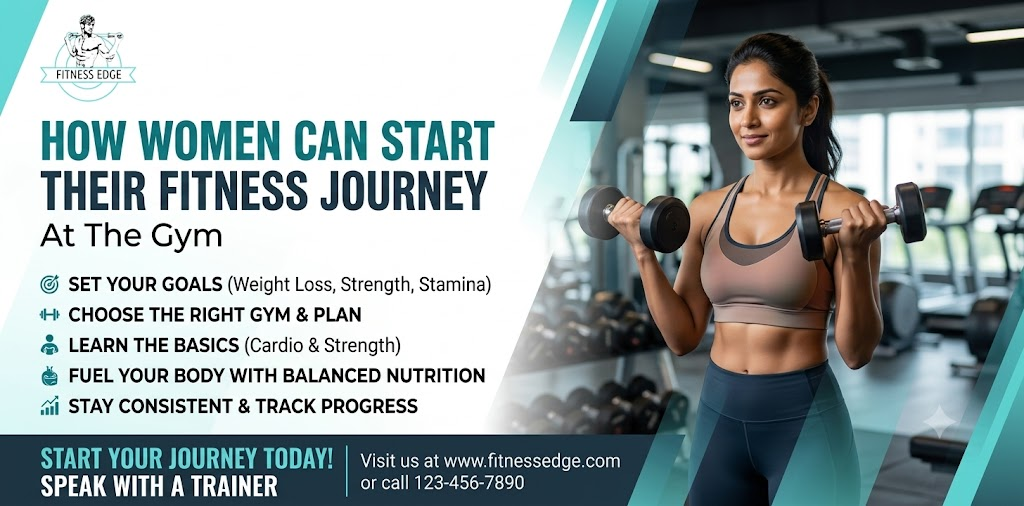
Starting your fitness journey at the gym can feel exciting, but it can also be intimidating, especially if you are a beginner. You might wonder which exercises to do, how to use gym equipment, what to eat, or how many days a week you should work out.
The good news is that you do not need to be fit before joining a gym. You simply need to start at a level that suits your body and build consistency over time.
Whether your goal is weight loss, muscle strength, improved stamina, or better overall health, this guide will help you understand how to start your fitness journey safely and confidently.
Why Should Women Start Working Out at the Gym?
Regular exercise can benefit women at every stage of adulthood. A balanced gym routine can help improve physical fitness, support mental well-being, and develop healthy habits.
Some important benefits include:
- Weight management: Exercise supports energy expenditure and can help with weight management when combined with suitable nutrition.
- Muscle strength: Resistance training helps build and maintain stronger muscles.
- Bone health: Weight-bearing activities and resistance exercises can support bone strength.
- Heart health: Cardio activities improve cardiovascular fitness.
- Better mood: Physical activity can help reduce stress and improve overall well-being.
- Daily energy: Improving strength and endurance can make everyday activities easier.
The most important thing is to choose a routine that matches your current fitness level and personal goals.
Step 1: Set Your Fitness Goals
Before starting your gym workouts, identify what you want to achieve. Having a clear goal makes it easier to choose suitable exercises and measure your progress.
Weight Loss
If you want to lose body fat, combine regular physical activity with balanced nutrition and sustainable lifestyle habits.
Muscle Building and Strength
Strength training with dumbbells, machines, barbells, or bodyweight exercises can help develop stronger muscles.
Improving Stamina
Walking, cycling, swimming, and other cardio activities can improve endurance and cardiovascular fitness.
General Fitness and Health
If you simply want to become healthier, focus on a balanced combination of cardio, strength training, mobility, and recovery.
Beginner tip: Choose one or two main goals rather than trying to change everything at once.
Step 2: Choose the Right Gym
Finding a comfortable and convenient gym can make it easier to stay consistent.
Before joining, consider these factors:
- Location: Choose a gym close to your home or workplace.
- Equipment: Check whether the gym has cardio machines, resistance machines, dumbbells, and suitable workout space.
- Cleanliness: Look for clean equipment, changing rooms, and workout areas.
- Trainer support: Ask whether qualified trainers can help beginners learn proper exercise techniques.
- Timings: Choose opening hours that fit your daily schedule.
- Women’s facilities: If important to you, check for women-only workout areas, female trainers, or women-only sessions.
- Membership cost: Understand the membership fee, personal training charges, and cancellation terms.
If possible, visit the gym before purchasing a membership to see whether you feel comfortable there.
Step 3: Start With a Beginner-Friendly Workout Plan
You do not need to spend two hours at the gym every day. Start with manageable sessions and gradually increase your workout duration as your fitness improves.
Here is a sample weekly plan for women who are new to gym training.
| Day | Workout | Duration |
| Monday | Full-body strength training | 30–40 minutes |
| Tuesday | Treadmill walking or cycling | 20–30 minutes |
| Wednesday | Rest or gentle walking | 15–20 minutes |
| Thursday | Full-body strength training | 30–40 minutes |
| Friday | Cardio and mobility | 20–30 minutes |
| Saturday | Light full-body workout or enjoyable activity | 20–30 minutes |
| Sunday | Rest and recovery | — |
Adjust the schedule according to your fitness level, recovery, and availability. Beginners can start with two strength sessions per week and progress gradually.
Step 4: Learn the Basic Gym Exercises
You do not need to use every machine on your first day. Focus on learning a few fundamental movements with proper technique.
Treadmill Walking
Walking is a simple way to warm up or improve cardiovascular fitness.
Start at a comfortable speed and increase it only when you feel ready. Use an incline if appropriate for your fitness level.
Leg Press
The leg press trains the muscles of your lower body.
Ask a trainer to show you how to adjust the seat, position your feet, and use a comfortable range of motion.
Seated Row
The seated row strengthens your back and helps you practise controlled pulling movements.
Keep your torso stable and avoid jerking the weight.
Chest Press
The chest press works your chest, shoulders, and triceps.
Choose a manageable resistance and follow the machine’s instructions.
Bodyweight Squats
Squats train your lower body and help develop everyday movement strength.
Start with bodyweight squats and use support if needed while learning the movement.
Planks
Planks train your core muscles. Start with a short, controlled hold and stop when you can no longer maintain good form.
Important: Ask a qualified trainer to demonstrate unfamiliar exercises. Good technique matters more than lifting heavy weights.
Step 5: Understand Cardio and Strength Training
A balanced fitness routine includes both aerobic activity and muscle-strengthening exercises.
What Is Cardio?
Cardio exercises increase your heart rate and improve cardiovascular fitness.
Examples include:
- Treadmill walking
- Cycling
- Elliptical training
- Swimming
- Dancing or Zumba
What Is Strength Training?
Strength training uses resistance to challenge your muscles.
Examples include:
- Dumbbell exercises
- Resistance machines
- Squats and lunges
- Push-ups
- Resistance-band exercises
Which Should Women Do First?
If your main goal is strength, perform strength training first when you are fresh. If endurance is your main priority, you may prefer to begin with cardio.
For general health and weight management, combining both is a practical approach. Choose the order that helps you exercise safely and consistently.
Step 6: Follow a Balanced Diet
Exercise is only one part of your fitness journey. Your food choices help provide the energy and nutrients your body needs.
Include Protein in Your Meals
Protein supports muscle repair and maintenance.
Useful options include:
- Eggs
- Milk and curd
- Paneer
- Dal and beans
- Fish
- Chicken
- Tofu and other soy products
Eat Fruits and Vegetables
Fruits and vegetables provide vitamins, minerals, fibre, and other beneficial nutrients.
Choose Suitable Carbohydrates
Foods such as oats, rice, whole-wheat roti, potatoes, and other whole grains can provide energy for daily activities and workouts.
Stay Hydrated
Drink water regularly throughout the day. Your fluid needs may increase during exercise, particularly in hot weather.
Avoid Extreme Diets
Skipping meals or following very restrictive diets may make it harder to meet your nutritional needs. Aim for a balanced, sustainable eating pattern that supports your goals.
Step 7: Wear Comfortable Gym Clothes
You do not need expensive gym clothing to get started.
Choose clothes that allow you to move comfortably and footwear appropriate for your workouts.
Useful items include:
- Comfortable workout clothes
- Supportive sports shoes
- A water bottle
- A small towel
- A gym bag
- Headphones, if you prefer listening to music
Choose sports bras that provide suitable support for your preferred activity.
Step 8: Stay Consistent and Track Your Progress
Many beginners expect immediate changes, but fitness improvements take time.
Instead of measuring success only by body weight, track different signs of progress.
For example:
- Completing workouts regularly
- Walking for longer without getting tired
- Lifting a little more weight with good technique
- Improving exercise control
- Feeling stronger during daily activities
- Developing better exercise habits
You can maintain a simple workout journal or use a fitness app to record your exercises, sets, repetitions, and resistance.
Remember that progress varies between individuals. Focus on gradual improvement rather than comparing yourself with others.
Step 9: Avoid Common Beginner Mistakes
When starting at the gym, avoid these common mistakes:
Doing Too Much Too Soon
Long, intense workouts can leave beginners overly tired. Start with manageable sessions and increase gradually.
Lifting Weights That Are Too Heavy
Use a resistance that allows you to complete the movement with controlled technique.
Ignoring Recovery
Your body needs time to recover between challenging workouts. Rest and sleep are important parts of training.
Comparing Yourself With Others
Everyone has a different starting point. Focus on your own progress.
Expecting Rapid Weight Loss
Sustainable results generally require consistent exercise, appropriate nutrition, and time.
Ignoring Pain
Muscle effort can be normal during exercise, but sharp pain, chest pain, dizziness, or unusual shortness of breath should not be ignored. Stop exercising and seek appropriate medical assistance when needed.
How Much Exercise Do Women Need Each Week?
The World Health Organization recommends that adults aim for:
- 150–300 minutes of moderate-intensity aerobic activity per week, or an equivalent amount of vigorous activity.
- Muscle-strengthening activities involving all major muscle groups on at least two days per week.
These are general adult recommendations. If you are currently inactive, start with shorter sessions and gradually build toward them.
Women who are pregnant, recently postpartum, managing a medical condition, or returning after an injury may need an individually adapted exercise plan and professional guidance.
Evidence-Based Benefits of Regular Exercise
The World Health Organization identifies regular physical activity as important for cardiovascular health, physical function, and mental well-being. Physical activity can also contribute to the prevention and management of several chronic health conditions.
The American College of Sports Medicine supports an individualized approach to exercise programming, including appropriate exercise selection, gradual progression, and resistance training. These principles are particularly useful for beginners because they help make workouts manageable and adaptable.
The key takeaway is simple: you do not need an advanced workout routine to begin benefiting from exercise. Starting at a suitable level and building consistency can help you develop a lasting fitness habit.
Frequently Asked Questions
1. How should a woman start going to the gym for the first time?
Begin by setting realistic goals, choosing a convenient gym, and learning basic exercises. Start with manageable sessions and ask a qualified trainer for help with unfamiliar equipment.
2. How many days a week should a beginner woman go to the gym?
Two or three gym sessions per week can be a reasonable starting point. You can add more activity gradually as your fitness and recovery improve.
3. Is the gym good for women who want to lose weight?
Yes. A gym can provide opportunities for cardio and strength training, both of which can support weight management. Nutrition and overall daily activity also matter.
4. Should women lift weights at the gym?
Yes. Appropriate strength training can help women build strength, maintain muscle, and support bone health. Begin with suitable resistance and learn correct technique.
5. Can beginners do cardio and strength training on the same day?
Yes. You can combine both in one session or do them on different days. Adjust the duration and intensity to your fitness level.
6. What should women eat before a workout?
A light meal or snack containing carbohydrates, with some protein if convenient, can work well. Examples include a banana with yogurt or oats with milk. Choose timing and portions that feel comfortable for you.
7. How long does it take to see gym results?
It varies according to your starting point, workout routine, nutrition, recovery, and goals. Improvements in exercise technique, stamina, and strength may appear before visible body changes.
8. Is a personal trainer necessary for beginners?
A personal trainer is not essential for everyone, but qualified guidance can help beginners learn exercises, understand equipment, and develop an appropriate training routine.
Final Thoughts: Start Your Fitness Journey Today
Starting your fitness journey at the gym does not have to be complicated. Set realistic goals, learn basic exercises, combine cardio with strength training, eat balanced meals, and give yourself time to improve.
You do not need to be perfect or follow the most intense workout plan. What matters is finding a routine that fits your lifestyle and continuing to build healthy habits.
Ready to take the first step? Visit a gym, speak with a qualified fitness trainer, and begin with a workout plan that matches your needs and fitness level.
Your fitness journey starts with one small step. Make today the beginning of a stronger, healthier you.